
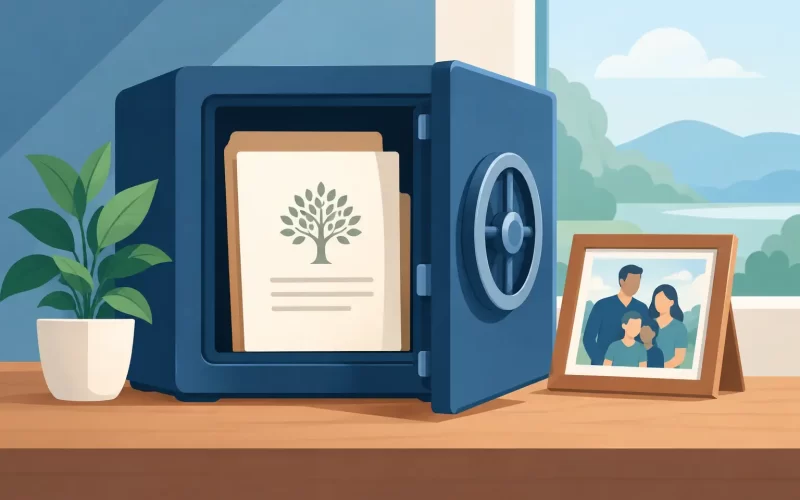
A will can be perfectly written, properly witnessed and legally valid, yet still cause real difficulty if nobody can find it. Secure will storage is not an afterthought. It is the practical step that helps ensure your wishes can be acted on when your family needs clear direction most.
The original signed will matters. After a death, executors usually need it to deal with banks, property, investments and, where required, the probate process. A photocopy or scan may help show what the will says, but it is not normally a substitute for the original document. If the original cannot be found, the estate may face delay, extra expense and questions about whether the will was revoked.
Why secure will storage matters
Many people put their will in a desk drawer, filing cabinet or folder marked “important”. That may seem sensible until a house move, flood, burglary, fire or clear-out puts it at risk. In other cases, the will is safe enough but no one knows where to look.
There is also a difficult family scenario to consider. If a will is stored at home and relationships are strained, someone with access to the property could remove or destroy it. This is not a pleasant thought, but estate planning works best when it accounts for avoidable problems rather than assuming everything will run smoothly.
A secure storage arrangement provides two things: protection for the original document and a reliable way for the right people to locate it. Both are essential. A will locked away so thoroughly that your executors cannot identify its location may still create a problem.
Where should you keep an original will?
The right choice depends on your circumstances, how quickly the document may need to be accessed and who you trust to deal with your estate. There is no single answer for every household, but each option has strengths and drawbacks.
Storage at home
Keeping your will at home is free and gives you direct access whenever you need to review it. A fire-resistant, waterproof safe may be appropriate if it is genuinely secure and your executors know it exists.
The downside is that home storage can be vulnerable to damage, theft and accidental disposal. Avoid loose drawers, ordinary folders and places that could be overlooked. Do not hide the will so cleverly that nobody can find it.
If you use a safe, make sure at least one executor or trusted person knows where it is and how access can be arranged. Giving them the code immediately is one option, but you may prefer to leave clear instructions with another trusted person. Think carefully about who has access while you are alive as well as after your death.
Storage with a will-writing provider or solicitor
Professional storage can be a sensible option for people who want the original held away from home. The provider should explain where documents are stored, how access is controlled, what identification or authority is required after death, and whether there are ongoing charges.
Before agreeing, ask whether you will receive confirmation of storage, a reference number and instructions for your executors. You should also understand how to retrieve your will if you decide to update it or move it elsewhere. A storage service should make the process clearer, not tie your family into uncertainty.
Bank safe custody and similar arrangements
Some people consider a bank safety deposit box or other private secure facility. These can offer physical protection, but access after death may be restricted until the bank is satisfied it can release the contents. That can be inconvenient if the will itself is needed to establish who has authority to act.
This does not always make such storage unsuitable, but it means you should check the access rules in advance. Your executors need to know the facility exists, the provider’s details and what steps they will need to take.
Tell the people who need to know
You do not have to share the contents of your will with family members. In fact, some people reasonably choose to keep their decisions private. But your executors should know that a will exists and where the original is held.
Give them the name of the storage provider, your reference number if there is one, and any practical contact details they may need. It is also wise to keep a note with your personal papers stating the location of your original will. A simple message such as “My original will is stored with [provider] under reference [number]” can save a great deal of searching.
If you keep a copy at home, label it clearly as a copy. This reduces the risk of someone assuming it is the original or becoming confused if there have been later updates.
It can help to tell a second trusted person too, particularly if your executor lives abroad, is older, or may be difficult to contact. The aim is not to involve everyone in your affairs. It is to prevent your final instructions being lost in silence.
Keep a digital copy, but do not rely on it alone
A scanned copy stored securely online can be useful. It gives your executors a quick reference, helps you check what you signed, and can be valuable if the original is temporarily unavailable. Password-protecting sensitive files and using two-factor authentication where available are sensible precautions.
However, a digital copy does not replace proper storage of the original signed will. English and Welsh law has formal requirements around signing and witnessing. For most estates, the original document remains the clearest proof of your final wishes.
Be cautious about saving a will in an email inbox without further protection, or leaving it on a shared household computer. Estate planning documents contain personal information about your family, assets and intended beneficiaries. Convenience should not come at the cost of privacy.
Do not store old and new wills together without clear labels
When you make a new will, it will usually revoke earlier versions. Keeping multiple signed originals together can create confusion, especially if family members discover them after your death. An older document may name different executors, beneficiaries or guardians for children.
Once you have signed a replacement will, ask what should happen to the previous original. It is often best to destroy it, unless there is a specific reason to retain it and it is clearly marked as revoked or replaced. Never alter, tear or write notes on your current signed will after it has been witnessed. Even a small change can raise legal questions.
This matters particularly after major life changes. Marriage, divorce, buying a home, having children, receiving an inheritance or separating from a partner can all affect whether your will still does what you intend. If you update your will, update the storage record and tell your executors about the new location.
What else should be stored with your will?
Your will should stand on its own. Do not attach informal notes, letters or asset lists to the original, as this can create uncertainty about whether they form part of the document.
That said, a separate letter of wishes can be helpful. It might explain funeral preferences, personal possessions, pet care, or practical information your executors will need. Keep it clearly separate from the will and review it from time to time.
A separate document can also record useful details such as where you keep insurance policies, pension information, property paperwork and a list of digital accounts. Do not include passwords in an unprotected file. Instead, leave a secure route for your executors to obtain them if needed.
Check your arrangements after every major change
Secure will storage is not a one-off decision. Review it when you move home, change executors, make a new will or change provider. If an executor dies or becomes unable to act, make sure the people taking their place can still find the document.
For many people, the best arrangement is simple: keep the original in a protected, known location; retain a clearly marked digital copy for reference; and ensure executors have enough information to act without guessing. The details will depend on your family and your estate, but the principle does not change.
A will protects the people you care about only when it can be found and used. Put a clear storage plan in place now, while you can explain it in your own words and give your family one less worry to carry later.