
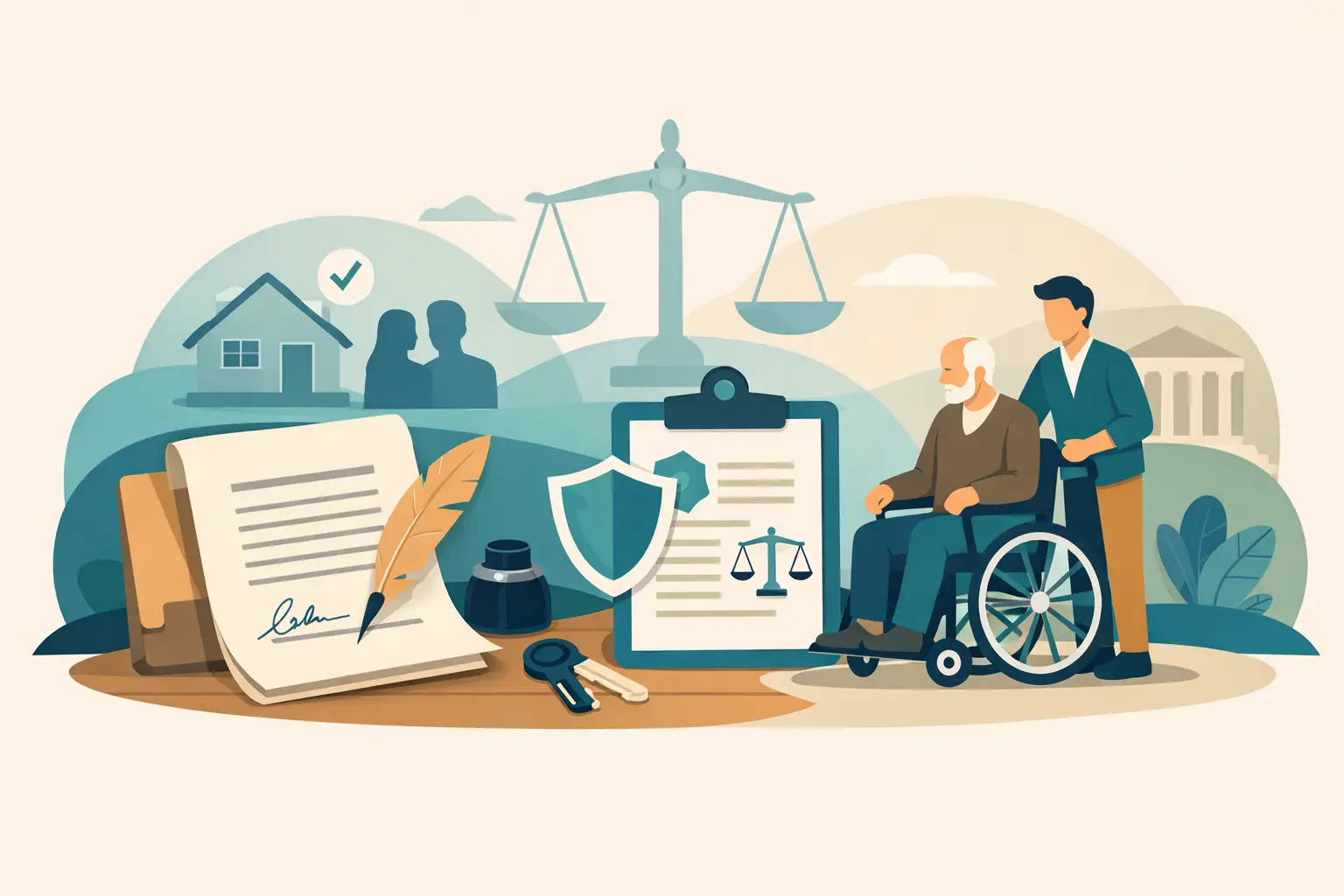
A will and lasting power of attorney are often spoken about together, but they solve two very different problems. One takes effect after your death. The other protects you while you are alive if illness, an accident or a loss of mental capacity means you cannot make decisions for yourself.
Many people make a will and assume that covers everything. It does not. Equally, a lasting power of attorney cannot say who should inherit your home, savings or personal possessions. Putting both documents in place gives your family clearer instructions at two difficult points in life, rather than leaving them to guess or apply to the court.
What does a will do?
A will sets out what should happen to your estate after you die. Your estate usually includes money in bank accounts, property, investments, personal belongings and anything else you own in your sole name.
In a will, you can name the people or charities you want to benefit, appoint executors to deal with your estate, and say who should look after children under 18. You can also make specific gifts, such as leaving jewellery to a relative or a fixed sum to a friend.
Without a valid will, the rules of intestacy decide who inherits. Those rules do not take account of your personal relationships, promises you may have made or the practical needs of your family. An unmarried partner does not automatically inherit under intestacy, however long you have lived together. This can create real financial pressure at an already painful time.
A will can also help couples plan carefully around a family home. For example, where appropriate, a couple may choose to hold their property as tenants in common and use their wills to protect each person’s share for their chosen beneficiaries. This is an area where the right arrangement depends on your circumstances, especially if there are children from an earlier relationship.
For a will to be valid in England and Wales, you must be at least 18, understand what you are signing, and sign it in the presence of two witnesses who are both present at the same time. The witnesses must then sign the will. A beneficiary, or the husband, wife or civil partner of a beneficiary, should not act as a witness because this can affect their gift.
What is a lasting power of attorney?
A lasting power of attorney, usually called an LPA, is a legal document that lets you appoint one or more trusted people to make decisions for you if you cannot, or if you want help managing things.
You must make an LPA while you have mental capacity. Mental capacity means being able to understand, retain and weigh up the information needed for a particular decision, then communicate that decision. Losing capacity is not limited to dementia. It may follow a stroke, serious injury, mental illness or a condition that develops gradually.
There are two types of LPA in England and Wales.
Property and financial affairs LPA
This allows your attorneys to deal with financial matters, such as paying bills, managing bank accounts, dealing with benefits, collecting income and, where authorised and necessary, buying or selling property.
You can choose whether this LPA may be used as soon as it is registered, with your permission, or only when you lose mental capacity. The first option can be useful if you are travelling, unwell or simply want someone to help with admin. It also requires a great deal of trust, so choose your attorneys with care.
Health and welfare LPA
This covers decisions about your care and treatment if you lack capacity to decide for yourself. It may include where you live, day-to-day care, medical treatment and life-sustaining treatment, depending on the choices you make in the document.
Unlike a property and financial affairs LPA, a health and welfare LPA can only be used when you lack capacity for the decision in question. Your attorney must act in your best interests and follow the principles of the Mental Capacity Act 2005.
An LPA must be registered with the Office of the Public Guardian before it can be used. Registration can take time, which is one reason not to leave it until a health crisis has begun.
Will and lasting power of attorney: the key difference
The simplest distinction is timing. A will speaks after death; an LPA speaks during life.
Your executors have authority to administer your estate after you die. Your attorneys have authority during your lifetime, within the limits of the LPA. An attorney cannot use an LPA after your death. At that point, your will and executors take over.
A will can name guardians for children, distribute assets and explain funeral wishes. An LPA cannot do those things. On the other hand, a will cannot allow somebody to speak to your bank, arrange care or make medical decisions while you are alive.
They work alongside each other, rather than replacing one another.
Choosing the right people
The people you appoint matter as much as the documents themselves. An executor needs to be organised, reliable and willing to deal with paperwork after your death. They may be a family member, friend or professional, and you can appoint more than one.
An attorney needs to be trustworthy, practical and capable of making decisions under pressure. They should understand your values and be prepared to speak up for your welfare. Many people appoint a spouse, civil partner, adult child or close friend, but there is no automatic right for relatives to act.
If you appoint more than one attorney, you can decide whether they must make all decisions together or whether they can act independently. Acting together can provide an extra safeguard, but it can also slow down routine tasks. Allowing attorneys to act independently is more flexible, yet demands confidence that each person will make sound decisions.
It is sensible to name replacement attorneys too. Circumstances change: a chosen attorney may die, become unwell, move abroad or no longer feel able to take on the role.
What happens if you do nothing?
If you lose capacity without an LPA, even a husband, wife, civil partner or adult child may not have legal authority to manage your affairs. Your family may need to apply to the Court of Protection to become a deputy. This route can be costly, time-consuming and more restrictive than choosing your own attorney in advance.
If you die without a will, intestacy rules apply. Your family could face delay, uncertainty and outcomes you would not have chosen. For instance, cohabiting partners can be left without an automatic inheritance, and children may inherit at 18 with no flexibility built into the arrangements.
These issues can become more complicated where there is a blended family, a business, a property owned with someone else, a vulnerable beneficiary or assets abroad. A standard will may still be suitable for many households, but more complex circumstances can call for tailored legal advice.
Can your will and LPA contradict each other?
They should not overlap in a way that creates confusion because they apply at different times, but your wider plans should make sense together. Consider who would look after your children, who would manage household money if you became unwell, and how your estate should pass after death.
You may want to tell your attorneys where you keep your will and other key documents, as well as sharing practical information about insurance, mortgage payments and regular bills. This is not about handing over control too soon. It is about making life easier for the people you trust if they ever need to step in.
Review both documents after major changes, such as marriage, divorce, separation, buying a home, having a child, receiving an inheritance or the death of an appointed person. Marriage generally revokes an existing will unless it was made in contemplation of that marriage, so it is particularly worth checking your arrangements at that point.
Make the decisions while they are yours
Estate planning is not only for older people or those with substantial wealth. A parent with young children, a couple buying their first home and someone living alone can all benefit from having clear legal arrangements.
Start with the people you trust, the assets and responsibilities you hold, and the decisions you would not want others to make without guidance. A clear will and an appropriate LPA do not remove every difficulty from the future, but they give your family something far more valuable than assumptions: your own considered instructions.