
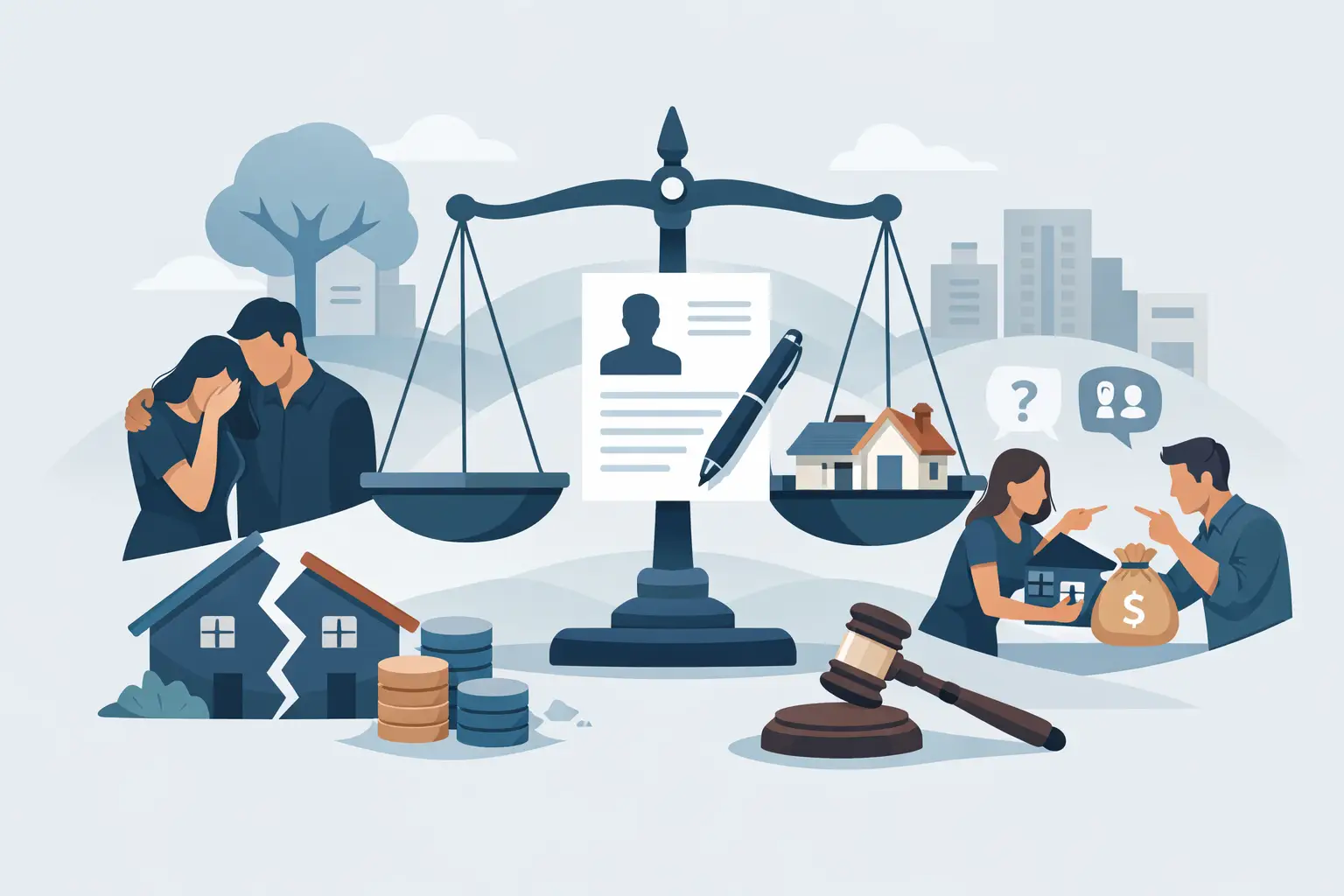
A family can be close, loving and certain they know what you would have wanted – yet still face difficult decisions and legal limits after your death. The question, what are the consequences of dying intestate, matters because without a valid will, the law decides who is entitled to your estate. Your personal relationships, promises and preferences may carry far less weight than people expect.
For people living in England and Wales, intestacy can mean delays, unexpected inheritances and missed protections for the people who rely on you most. Making a will is not only about money. It is a practical way to give your family clarity at a time when they will need it.
What does dying intestate mean?
You die intestate when you die without a legally valid will. This can happen because you never made one, but it can also happen when a will was not signed or witnessed correctly, was later revoked, or does not deal with everything you own. A will can be partly effective and partly intestate if, for example, it leaves out a bank account or an asset acquired after it was written.
When this happens, the intestacy rules set out who inherits. These rules apply in England and Wales. They are fixed legal rules, rather than a judgement about who was closest to you or who needs support most.
What are the consequences of dying intestate for your family?
The biggest consequence is loss of control. You cannot choose who receives particular possessions, decide how your estate should be divided, or make gifts to friends, charities and stepchildren unless they happen to qualify under the legal order of inheritance.
The rules also do not account for the details that make up ordinary family life. Perhaps your adult child has cared for you for years, while another has been financially secure. Perhaps you wanted a grandchild to receive money for university, or a friend to have a treasured possession. Without a will, those wishes are usually not legally binding.
Your spouse or civil partner may not inherit everything
Many married couples assume that the surviving spouse automatically receives the whole estate. That is only true in some circumstances.
If you are married or in a civil partnership and have no children or other descendants, your spouse or civil partner will normally inherit the entire estate. But if you have children, including adopted children, the position changes. Your spouse or civil partner generally receives your personal possessions, the statutory legacy, currently £322,000, and half of what remains. Your children share the other half of the remaining estate equally.
This may create a real financial problem. A surviving partner may need to sell investments, savings or even consider selling the family home to meet an entitlement due to the children. The precise outcome depends on the value of the estate and how assets are owned, but it is not a decision the family can simply agree to ignore.
Unmarried partners have no automatic right to inherit
This is often the most upsetting outcome of intestacy. A cohabiting partner does not automatically inherit under the intestacy rules, no matter how long you have lived together or whether you have children together. There is no legal status of ‘common-law marriage’ in England and Wales.
If the home is owned solely in your name, or if your partner relies on your income or savings, they could be left in a vulnerable position. They may be able to make a claim against the estate in some cases, but this can be stressful, expensive and uncertain. It is far better to state clearly what you want in a valid will.
Stepchildren also do not automatically inherit from a stepparent unless they have been legally adopted. This can come as a shock in blended families, where bonds may be every bit as strong as biological relationships.
Children may inherit sooner than you intended
Under intestacy, children can become entitled to their inheritance at 18. That may be appropriate for some families, but not for all. You may prefer money to be held until a child is older, used for education or a first home, or managed carefully if they are vulnerable or financially inexperienced.
A will can include trusts and directions that give greater protection and flexibility. Intestacy does not offer the same ability to tailor arrangements around your family.
Your estate may be slower and harder to administer
When there is no will, there is no executor appointed by you. Instead, someone entitled under the intestacy rules must apply to the Probate Registry for a grant of letters of administration. This person is known as the administrator.
A surviving spouse or civil partner will usually have priority, followed by children and other relatives in a set legal order. If relatives disagree about who should take on the role, administration can stall. The administrator has legal duties and personal responsibility for collecting assets, paying debts and distributing the estate correctly.
This can add pressure at an already difficult time. Banks, insurers and other organisations may require formal documents before releasing funds. Where the family structure is complicated, establishing who is entitled can take considerable work. The estate cannot be distributed simply because everyone believes they know what you would have wanted.
Some of the people you care about may receive nothing
If there is no spouse, civil partner or children, the law follows a strict order through relatives. This starts with parents, then siblings and their descendants, then more distant relatives. Friends, unmarried partners, carers and charities do not automatically inherit.
If no eligible relative can be found, the estate can pass to the Crown. This is called bona vacantia. It is an uncommon outcome, but it shows how far the legal result can be from a person’s private wishes.
Certain assets may pass outside the estate. For example, a jointly owned property held as beneficial joint tenants will usually pass automatically to the surviving owner. Pension death benefits may be decided by the pension provider, often taking account of an expression of wishes, and life insurance written in trust may follow the trust terms. These arrangements can be useful, but they are not a substitute for a will and should be reviewed alongside it.
Parents lose the chance to appoint guardians
For parents of children under 18, this is one of the most important consequences of dying without a will. A will allows you to name the people you would want to care for your children if both parents have died.
Without that appointment, there may be uncertainty about who should take responsibility. The court may need to become involved if there is disagreement or no obvious suitable person. Family members may have strong views, but a disagreement at this point can be deeply distressing and disruptive for children.
A guardian appointment does not remove the court’s role where safeguarding concerns exist, but it provides clear evidence of your considered choice. It also allows you to discuss the role with the people you would like to appoint.
Tax planning and personal protections may be missed
Dying intestate does not automatically create an inheritance tax bill. Whether tax is due depends on the size and make-up of your estate, available allowances and who inherits. However, a will can help you plan more deliberately, particularly where there are children from a previous relationship, a business, property, or a person who needs ongoing financial support.
A properly considered will can also protect assets for a surviving spouse or partner while preserving an eventual inheritance for children. This can be especially relevant when a home is owned by one person, or when couples want to reduce the risk of assets being diverted after a later remarriage.
These arrangements are not necessary for every household. The point is that intestacy removes the option to make them. The law supplies a standard answer, even where your circumstances are far from standard.
How to avoid dying intestate
The practical answer is to make a valid will, keep it safe and review it when life changes. Marriage usually revokes an existing will unless it was made in contemplation of that marriage. Divorce can also alter how a will works. Buying a property, having children, separating from a partner, receiving an inheritance or starting a business are all sensible moments to check that your will still reflects your wishes.
Choose executors you trust, be clear about who should inherit and consider guardians if you have young children. Your will must be signed correctly in the presence of two witnesses, who must also sign it. Beneficiaries and the spouses or civil partners of beneficiaries should not act as witnesses, as this can affect their gift.
For many households, getting these essentials in place is more straightforward and affordable than they imagine. English Wills helps people in England and Wales make clear, legally valid arrangements without turning a necessary family decision into an intimidating process.
A will cannot take away the sadness of a bereavement, but it can spare the people you love from having to guess, argue or depend on rules that do not reflect your life. Making one now gives them something far more useful than good intentions: clear direction when they need it most.