
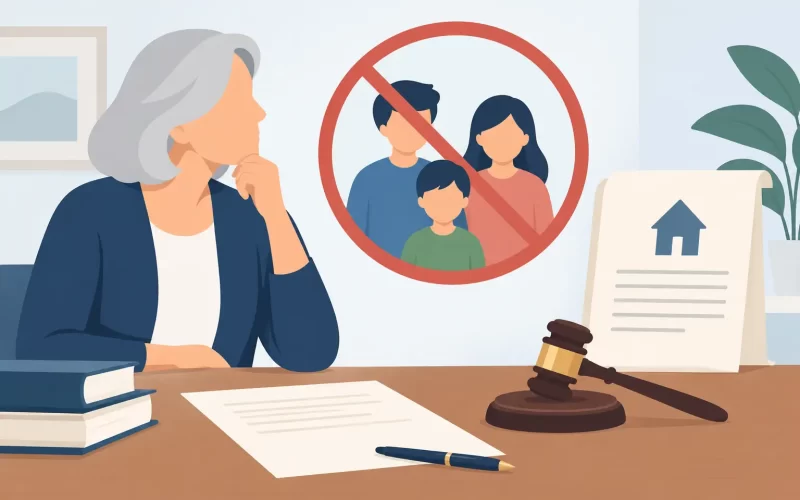
A parent may have spent years supporting a child, become estranged from them, or simply feel that another person has greater need. Whatever the reason, the question is often the same: can a will exclude children? In England and Wales, the short answer is yes. You are generally free to decide who inherits your estate. But leaving a child out of a will can carry risks, especially if they are financially dependent on you or likely to challenge the decision after your death.
The safest approach is not to make a rushed change or rely on a conversation that may later be disputed. A carefully written, properly signed will gives your wishes the best chance of being followed and can reduce uncertainty for the people you leave behind.
Can a will exclude children in England and Wales?
Yes. There is no automatic rule that says children must receive a fixed share of a parent’s estate in England and Wales. Unlike some countries, there is no system of forced heirship requiring you to leave part of your estate to your children.
You can leave your estate to a spouse, partner, friends, charities, other relatives, or anyone else you choose. You can also leave different amounts to different children. Fair does not always mean equal. For example, one child may have received significant financial help during your lifetime, while another is caring for you, has a disability, or is in a less secure financial position.
However, freedom to make a will does not mean every decision is immune from challenge. An excluded child may be able to make a claim if reasonable financial provision has not been made for them.
When an excluded child may make a claim
Under the Inheritance (Provision for Family and Dependants) Act 1975, certain people can ask the court for reasonable financial provision from an estate. Adult children can bring a claim, although success is not automatic. The court looks closely at the circumstances rather than simply assuming that an adult child should inherit.
A claim may be more likely where a child was financially dependent on you, has a disability or serious health needs, was living with you, or has limited means. The size of the estate, their financial needs, the needs of other beneficiaries, and the reasons behind the will are all relevant.
Minor children deserve particular care. If a child is under 18 and depends on you, excluding them entirely may create a substantial risk of a claim. The same can be true for an adult child who remains dependent because of illness, disability, education or other circumstances.
A stepchild does not automatically inherit under intestacy rules in the same way as a biological or adopted child. But a stepchild who was treated as a child of the family, particularly where they were financially dependent on you, could have grounds to bring a claim. This is one reason blended families benefit from clear planning rather than assumptions.
Excluding a child is different from explaining a difficult relationship
Your will does not need to set out every painful detail of a family dispute. In fact, including lengthy criticism or accusations in the will itself can create more distress and invite arguments about what you meant.
If you decide to exclude a child, it can be sensible to prepare a separate letter of wishes explaining your decision in calm, factual terms. This is not normally legally binding in the way a will is, but it can provide useful context for your executors and may help show that the decision was deliberate rather than an oversight.
Keep the letter measured. A statement such as, “I have chosen not to leave a gift to my son because I have already provided significant financial support during my lifetime,” is usually more helpful than a list of grievances. Do not make claims that cannot be supported or write in anger. The aim is clarity, not punishment.
If your circumstances are complex, or you expect a serious challenge, professional legal advice may be worthwhile before finalising your will.
Why no will can make matters worse
Some people assume that doing nothing is an easy way to avoid making a difficult decision. Usually, it is the opposite. If you die without a valid will, the rules of intestacy decide who inherits. You do not get to choose who receives your assets, who administers your estate, or how family possessions are divided.
For a parent who wishes to exclude an adult child, intestacy is particularly risky because children can inherit under the statutory rules in certain circumstances. The outcome will depend on your family situation and the value of your estate, but it may be very different from what you intended.
A valid will is also useful where you want to leave a small, specific gift to an excluded child rather than nothing at all. There is no universal answer here. A modest legacy may show that you considered them, but it does not necessarily prevent a claim. Equally, leaving nothing may be entirely appropriate in some families. The right choice depends on the facts.
How to make your decision harder to challenge
No document can guarantee that nobody will contest your will. But sensible preparation can make a major difference. Your will should be clear about who receives what, name reliable executors, and deal with the whole of your estate rather than leaving loose ends.
It also needs to be signed correctly. For a standard will in England and Wales, you must sign it in the presence of two witnesses who are both present at the same time. The witnesses must then sign the will. A beneficiary, or the spouse or civil partner of a beneficiary, should not act as a witness because this can affect their gift.
The circumstances around making the will matter too. If someone later argues that you lacked mental capacity or were pressured into excluding a child, evidence can become important. Make your will when you are able to understand your assets, the people who may expect to benefit, and the effect of your decisions. If you are unwell, vulnerable, or anticipating disagreement, it may be sensible to keep a note of the process and obtain appropriate advice.
You should also review the will after major changes. Separation, divorce, remarriage, a new partner, a house move, an inheritance, or a shift in family relationships can all affect whether your will still reflects your wishes. Marriage generally revokes an existing will unless it was made in contemplation of that marriage, so do not assume an old document will still work.
Think about the people who will remain
Excluding one child can affect more than that child. It may place your executors in the middle of a family dispute, upset siblings who are inheriting, and delay the administration of the estate. This does not mean you should abandon your wishes to keep the peace. It means the decision should be made with open eyes.
Consider whether your executors are suitable for the task. A sibling who is also inheriting may be perfectly capable, but they may face difficult conversations and potential allegations of bias. In a high-conflict situation, choosing a neutral and organised executor can sometimes reduce pressure on the family.
It is also worth thinking beyond money. Sentimental items, such as photographs, jewellery or family furniture, often cause more friction than bank accounts. Your will can make specific gifts, while a separate personal possessions list can help set out practical wishes. Be as precise as possible where an item has special significance.
If you want to leave something for grandchildren instead
A common reason for excluding an adult child is a wish to benefit grandchildren directly. You may want to help with education, a first home, or support after you are gone. This can be done through a will, but the wording matters, particularly if grandchildren are still young.
Leaving money outright to a minor means it will usually need to be managed by trustees until they are old enough to receive it. You may prefer to set an age for inheritance, such as 21 or 25, or allow trustees discretion to use funds earlier for education, maintenance or a first home. This is not simply about control. It can provide protection while still giving practical support when it is needed.
Be careful not to assume that a gift to grandchildren removes the possibility of a claim by their parent. If the excluded child has financial needs or was dependent on you, the estate could still face a claim. Good planning weighs your intended gifts against the wider family picture.
Make the will say what you mean
Difficult family decisions rarely become easier through delay. If you have decided that a child should not inherit, a clear and valid will is far safer than leaving your estate to intestacy rules, old paperwork or family guesswork.
Take time to consider the likely consequences, record your wishes calmly, and make sure the document is properly witnessed and stored where your executors can find it. Your will is your opportunity to protect the people and causes you choose, with clarity that can spare those left behind from uncertainty at an already difficult time.