
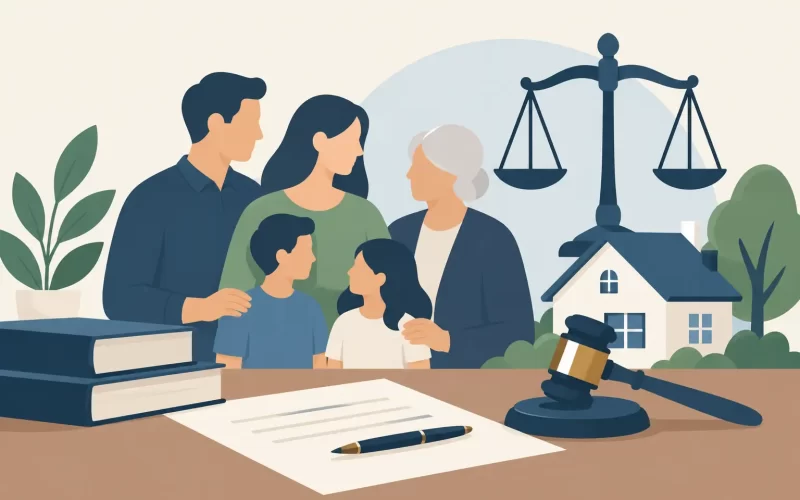
A will can sit quietly in a drawer for years, while the things it needs to deal with change around it: a house rises in value, a child becomes an adult, a pension grows, or a couple marry, separate or buy a home together. That is why inheritance law trends matter. They are not just stories for wealthy families or legal professionals. They can change the questions ordinary households should ask before assuming an old will still does the job.
For most people, the sensible response is not to panic or constantly rewrite their will. It is to understand the areas most likely to affect their family, then review their arrangements when life or the rules move on.
Inheritance law trends: more planning, not more complexity
One clear trend is that estate planning is no longer only about naming who receives your savings. Families increasingly need to consider how property is owned, whether pensions fall inside the estate for inheritance tax purposes, and whether a simple gift could leave a surviving partner financially exposed.
This does not mean every will needs complicated trusts or specialist clauses. A straightforward will is still the right starting point for many people. But it needs to reflect the assets you actually own and the people you want to protect.
The biggest risk is often delay. Without a valid will, the intestacy rules decide who inherits. Those rules may not match your wishes, particularly if you are unmarried, have children from an earlier relationship, or want to leave money to friends, stepchildren or charities.
Property ownership is under greater scrutiny
For many households, the family home is the largest asset in the estate. The way it is owned can be just as significant as what the will says.
Couples who own a home as joint tenants generally own it together as one whole. When one owner dies, their share usually passes automatically to the surviving owner. This is known as the right of survivorship. A gift of that share in a will will not normally take effect.
Tenants in common each own a defined share instead. That share can be left by will, which creates more choices. For example, a person may want their partner to remain in the home while ultimately preserving their share for their children. This can be relevant for blended families, where each partner wants to balance care for the survivor with an inheritance for children from a previous relationship.
Protective Property Trusts and Flexible Life Interest Trusts can be useful in the right circumstances. Broadly, they may allow a surviving spouse or partner to benefit from a property during their lifetime, while helping to protect the deceased person’s share for named beneficiaries later. They are not automatic answers. Trusts bring responsibilities for trustees and must be drafted to suit the family, the property and the intended outcome.
It is also worth remembering that a trust in a will cannot fix every problem. If the home is owned as joint tenants, the ownership may need to be changed before the will can control a share of it. This is one reason a review of the title deeds and ownership arrangement is valuable.
Why second marriages need careful thought
A common scenario is a couple who marry later in life, each with adult children. Leaving everything outright to the surviving spouse may feel natural and may be entirely appropriate. But it can also mean the first person’s children receive nothing if the survivor later changes their own will, remarries, spends the assets on care, or leaves their estate elsewhere.
There is no one correct choice. The important thing is to make the choice knowingly, rather than relying on assumptions about what will happen after the first death.
Pensions are becoming a bigger part of the conversation
Pensions have traditionally been treated differently from assets such as a bank account or a house. Many defined contribution pensions are held outside the estate and are paid at the discretion of the pension provider or trustees. This can make an up-to-date expression of wishes especially important.
Government policy and tax rules around pensions and inheritance have attracted increasing attention, and future changes may affect how pension death benefits are treated. The precise position can depend on the type of pension, the scheme rules, the age at death and the rules in force at the time.
The practical point is simple: do not assume your will alone controls your pension. Check who is nominated to receive it, whether the nomination still reflects your wishes, and whether the provider has your current details. A will, pension nomination and life insurance nomination should work together, not point in different directions.
Inheritance tax planning is moving closer to ordinary households
Inheritance tax can sound like a concern only for very large estates. Yet rising property values, frozen allowances and accumulated pension savings mean more families are at least checking whether it could apply.
Transfers between spouses and civil partners are usually exempt from inheritance tax, and allowances may be available where a home is left to direct descendants. However, the detail matters. The value of the estate, previous gifts, the type of assets held and the wording of the will can all affect the result.
Giving assets away during your lifetime is sometimes discussed as a quick answer. It may help in some cases, but it is not risk-free. You may need the money later, and gifts can have tax consequences if you do not survive for long enough after making them. Giving away a home while continuing to live there can be particularly complicated.
For most families, the first step is not aggressive tax planning. It is making an accurate list of assets and debts, checking how property is owned, and ensuring the will uses available allowances sensibly where appropriate. If the estate is substantial, includes a business, agricultural property or overseas assets, tailored professional advice is sensible.
Digital lives are exposing gaps in older wills
Another of the inheritance law trends worth watching is the growing importance of digital assets. Your executors may need access to online bank accounts, email, cloud storage, social media profiles, digital photographs, cryptocurrency or subscriptions after your death.
A will should not contain passwords or security codes, as it becomes a public document after probate. Instead, keep a separate, secure record of key accounts and instructions for your executors. Tell them where that record is stored and update it as accounts change.
Digital assets are not only about financial value. Families often care deeply about photographs, messages and personal records held online. A little planning can spare them a difficult search at an already upsetting time.
Families are prioritising dispute prevention
Will disputes are regularly reported, but they are not inevitable. They often begin with surprise, unclear communication or a will that was never updated after a major life event.
Marriage usually revokes an existing will unless it was made in contemplation of that specific marriage. Divorce does not automatically revoke a will in the same way, although a former spouse is generally treated as having died before you for many purposes after a final divorce. Separation, however, may leave an ex-partner benefiting under an old will. These are moments to act promptly, not leave paperwork for another day.
Choosing executors carefully also matters. An executor needs to be organised, trustworthy and willing to deal with the administration of the estate. Naming two people can share the work, but it is wise to consider whether they are likely to cooperate. Family relationships can change, and a review gives you the chance to appoint replacements if necessary.
If your decisions may upset expectations, a calm conversation during your lifetime can sometimes reduce the likelihood of conflict. You do not have to disclose every figure or every detail. But explaining the reason for a decision, such as providing differently for a child who has caring responsibilities or protecting a vulnerable beneficiary, can prevent misunderstanding.
When should you review your will?
A review every few years is a useful habit, but certain events call for one sooner. These include buying or selling a property, getting married, divorcing, having children, becoming a grandparent, receiving an inheritance, starting a business, or the death or illness of an executor or beneficiary.
Check the practical details as well as the legal wording. Are your executors still suitable? Have you named guardians for children under 18? Is the original will stored safely, and do your executors know where to find it? A perfectly drafted will cannot help if nobody can locate it.
Making a will does not require you to predict every future change. It gives your family a clear starting point and puts your wishes in control. Review it when life changes, keep the supporting information organised, and take action while the decisions are still yours to make.